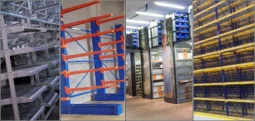
Uses of Pallets in Storage Areas
In today's industrial field, with the significant developments in production, companies involved in manufacturing and trade are using pallet technology for faster and more reliable loading and unloading of their goods from vehicles to warehouses. It easily helps to handle tons of weight at once without causing damage. With the help of large cranes or forklifts, the product is transported to warehouses or large vehicles. Thus, the approximate amount of goods on a pallet is easily determined during transportation, and it is delivered to the retailer without any counting issues. Pallets have become a savior for both the producer and the retailer in preserving the freshness or physical structure of the product by easily storing them in warehouses without exposure to external factors. They help eliminate financial losses and protect products up to a certain level in warehouses during sudden floods. It is known that pallets provide order in warehouses and prevent certain harmful organisms from damaging the goods. Pallets, which are the number one assistant for warehouse managers, are used in different structures depending on the production goods. There are pallets made of different materials that can provide more convenience in transporting products and goods created according to the types of products and the goods produced in each industrial sector.
Pallet Options Based on Structure
Pallets can be classified as pallets made of hard plastic material, metal pallets, and wooden pallets. Due to the differences in flexibility, durability, structure, and design of these pallets, it is known that they provide convenience in transporting many products. While metal pallets facilitate material handling in the military sector, hard plastic pallets are more convenient for transporting retail products. Furthermore, it is known that wooden pallets are used for transporting materials that are not durable, such as glass and porcelain, and when properly packaged and supported, these products are moved with minimal damage. Pallet prices vary according to their dimensions and types. Metal-accented pallets are the most expensive, followed by wooden pallets. The dimensions of pallets are the same for all different types.
Wooden pallet prices vary according to dimensions, especially for porcelain and electronic items, for those working with less durable goods. Another factor that causes changes in wooden pallet prices is the type of material used in their construction. Pine has been determined to be the most suitable material for durability and flexibility. When creating wooden pallets, wood should be used that is the most suitable and of the highest quality material.
www.ozenpalet.com