
What is the Importance of Circuit Breaker Contact Transition Resistance in Electrical Systems?
How is Circuit Breaker Contact Transition Resistance Measured?
Circuit breaker contact transition resistance is defined as the resistance between two contacts when the circuit breakers are in the closed position in electrical circuits. Circuit breaker contact transition resistance is a critical parameter for the efficiency and safety of electrical systems. Low resistance indicates good electrical contact, while high resistance generally indicates problems such as contamination, wear, or oxidation of the contact surfaces. High resistance can lead to energy loss and overheating, endangering the safety of the system. Circuit breakers in electrical systems function to open and close circuits, taking on the role of protecting the circuit in cases of overcurrent or short circuit. For more detailed information about circuit breaker contact transition resistance, you can examine the website https://merfaenerji.com/urun-kategori/kesici-test-cihazlari/.
How are Circuit Breaker Contact Transition Resistance Failures Detected?
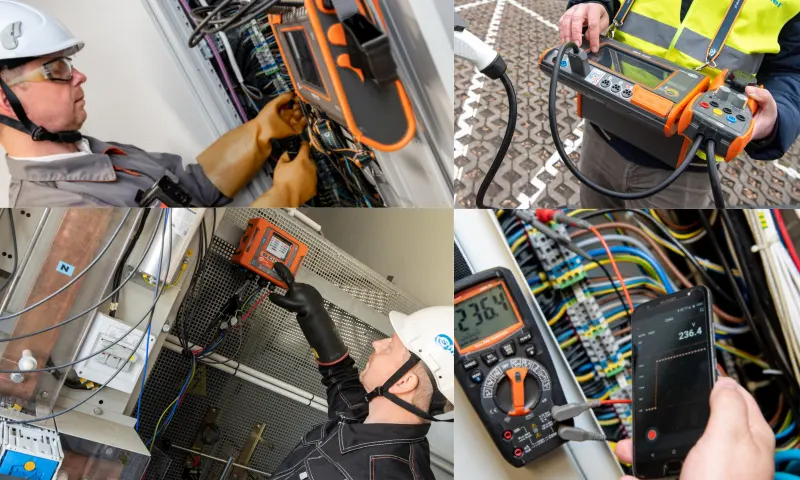
Circuit breaker contact transition resistance is measured using low resistance measuring devices, i.e., micro-ohmmeters. These devices evaluate the system's performance by measuring the resistance between the contacts at the milli-ohm level. During measurement, the circuit breaker must be in the closed position, and the connection between both contacts must be fully established. Measurement results are compared with a specific reference value. If the measured value is above the reference value, this indicates a problem. High resistance values indicate a condition requiring maintenance and can lead to larger failures if not addressed in time. Circuit breaker contact transition resistance failures are detected during routine maintenance operations. High resistance values indicate problems on the contact surfaces such as dirt, oxidation, or mechanical wear. These problems can be resolved by cleaning the contact surfaces, applying protective coatings against oxidation, or renewing the contacts. Regular maintenance and monitoring procedures should be applied to prevent failures. Periodic inspection of circuit breakers and measurement of contact transition resistance ensure early detection of potential failures.