
Geographical Features of the Aegean Sea
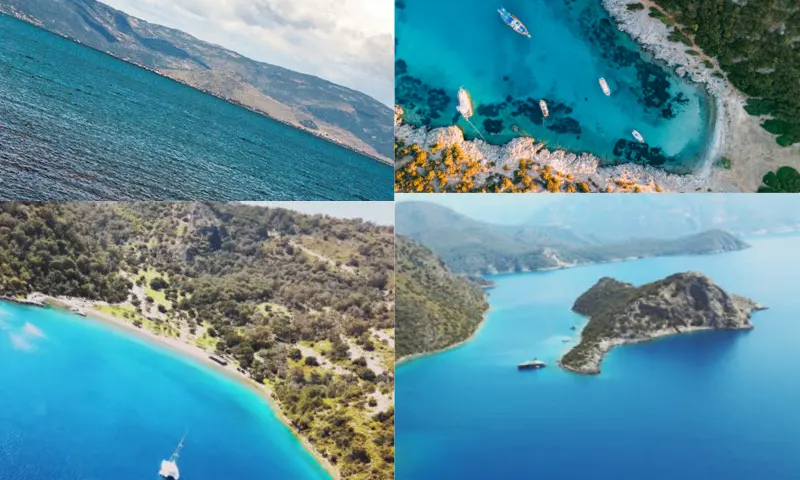
The Aegean Sea is an important body of water located west of Turkey, separating Greece from Turkey. The sea extends from the Eastern Mediterranean to Western Anatolia and covers a total area of approximately 180,000 square kilometers. The Aegean Sea is also a region with many islands, and the number of islands exceeds 1,200. Some of these islands, such as Mytilene, Rhodes, Chios, and Samos, are popular tourist destinations. The Aegean Sea has been used as an important trade route throughout history. In ancient times, this sea was a center where Greek civilizations flourished. The Aegean Sea also has a rich marine ecosystem. It harbors ecological wealth such as various fish species, marine mammals, and coral reefs in the sea. With these features, the Aegean Sea has become a tourist region that stands out with its natural beauty.
Historical and Cultural Heritage of the Aegean Sea
The Aegean Sea has hosted many civilizations throughout history and harbors the cultural heritage of these civilizations. The ancient Greek period witnessed great development in the cities around the Aegean Sea. During this period, cities such as Athens, Miletus, Ephesus, and Knidos became important cultural centers. The Aegean Sea was also an important part of the Roman Empire. Located on the western borders of the empire, the sea had a strategic position for trade and transportation. Ancient theaters, temples, and monuments from this period can still be seen in the cities around the Aegean Sea. The historical and cultural richness of the Aegean Sea includes many sites listed on the UNESCO World Heritage List. Among these sites are important structures such as the Ancient City of Pergamon, the Ancient City of Aphrodisias, and the Selimiye Mosque. The Aegean Sea is a destination worth exploring for history and culture enthusiasts.





