
Definition and History of Walkie-Talkies
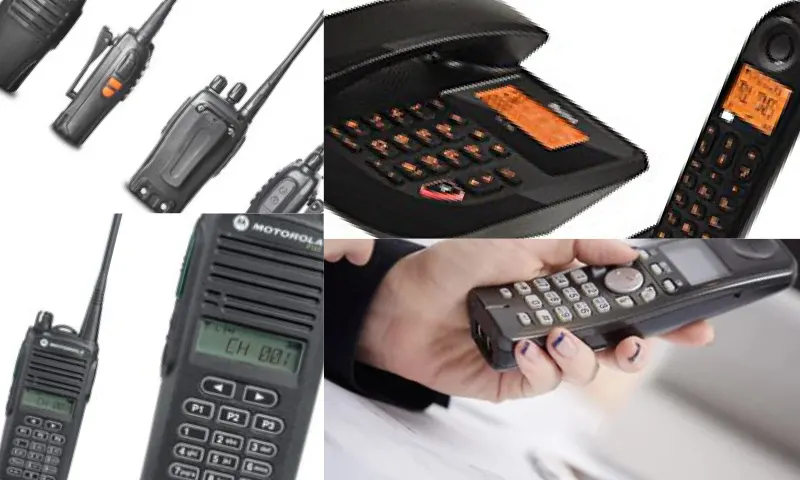
Walkie-talkies are portable devices that enable wireless communication. These devices communicate via radio waves. The first walkie-talkies began to be used in the 1940s. They were initially used for military purposes. However, over time, walkie-talkies became more widespread and popular, especially among travelers, mountaineers, hunters, and other outdoor enthusiasts. For information on this topic and to ask your questions, you can visit the relevant online companies on web pages and examine them in detail.
How Walkie-Talkies Work and Their Advantages
Walkie-talkies allow users to communicate with each other wirelessly. For this, each walkie-talkie has a transmitter and a receiver. The transmitter sends a signal, and the receiver receives this signal. In this way, users can talk to each other and exchange information. Walkie-talkies have many advantages. For example, users can communicate with each other without needing any cables or physical connections. This feature makes walkie-talkies ideal for outdoor activities.
What is a Walkie-Talkie and How Does it Work?
A walkie-talkie is a device used for wireless communication. Communication between two or more walkie-talkies occurs over electromagnetic waves. Walkie-talkies offer a stronger signal compared to mobile phones, especially in open areas or mountainous regions. Walkie-talkies basically consist of a transmitter and a receiver. The transmitter sends voice signals as electromagnetic waves, while the receiver captures these waves and reconstructs the sound.